- Move furniture and electronics away from the leak if possible
- Place buckets or containers under active drips and empty them often
- Use towels, plastic sheeting, or tarps indoors to protect flooring and nearby items
A roof leak rarely waits for a convenient time. Whether a storm has torn shingles loose or you notice water staining the ceiling after a long rain, the first goal is not to permanently fix the roof on your own.
It is to reduce damage safely until a roofer can inspect and repair the problem.
→ Call (678) 737-7062 for a free Dallas roofer estimate — answered 24/7, no obligation.
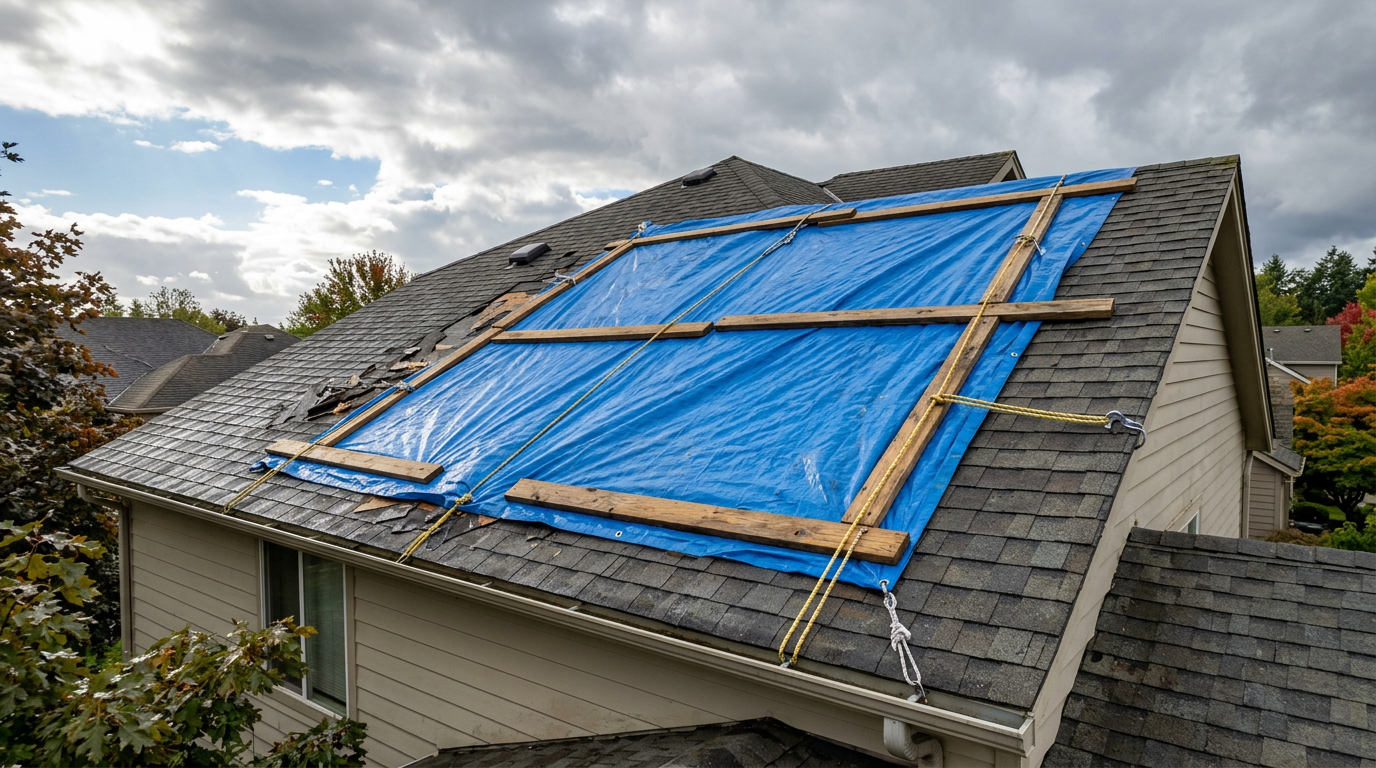
Emergency roof tarp work can help, but only if it is done carefully. A temporary tarp is meant to shed water for a short period, not serve as a long-term fix.
If conditions are unsafe, or if the roof is steep, damaged, or wet, it is usually better to stay off the roof and focus on indoor damage control while you wait for professional help.
What to do right away when you spot a leak
Quick action inside the home can prevent a small leak from turning into a much bigger repair. Start by protecting people, belongings, and the area below the leak.
- Move furniture and electronics away from the leak if possible.
- Place buckets or containers under active drips and empty them often.
- Use towels, plastic sheeting, or tarps indoors to protect flooring and nearby items.
- Relieve any bulging ceiling spots only if you can do so safely; trapped water can collapse damaged drywall.
If you see water coming through a ceiling, wall, or around a vent, the visible drip may not be the only issue.
Water can travel along rafters, insulation, and framing before it appears indoors, so the entry point on the roof may be several feet away from the leak inside.
When a roof tarp makes sense
→ Get (678) 737-7062 on the line and price your job now — answered 24/7, no obligation.
A tarp is a temporary weather barrier. It can be useful after storm damage, missing shingles, or a puncture that is actively letting water in.
It is most practical when the roof section is accessible and the damage is limited enough that a tarp can cover it securely.
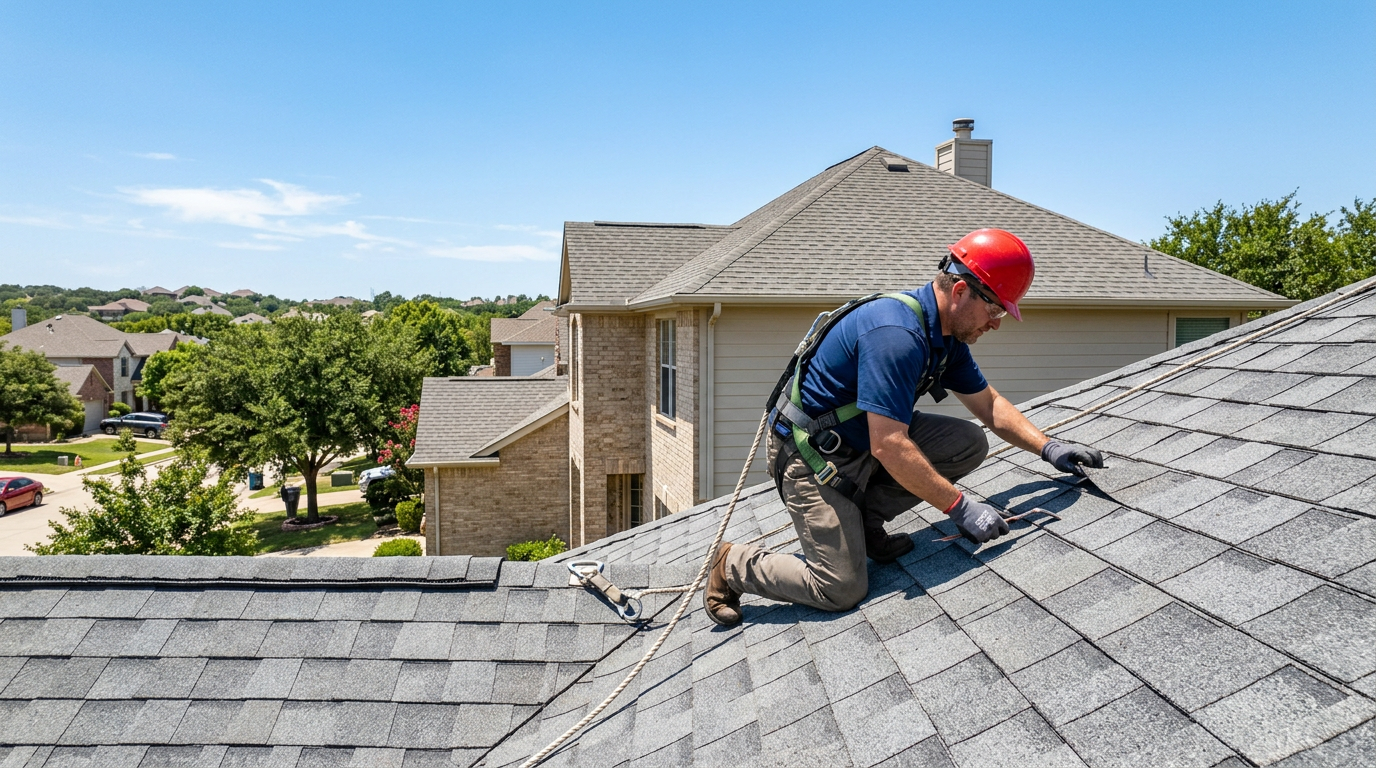
Before you consider going onto the roof, ask whether the surface is dry, whether there is wind, and whether the slope is safe for you. If the answer to any of those questions is no, skip the climb.
A fall creates a larger emergency than the leak.
Basic supplies for an emergency tarp
- A heavy-duty tarp large enough to extend beyond the damaged area
- Roofing nails or screws with washer heads, if appropriate for the situation
- 2x4 boards or other materials to help secure the tarp edges
- Gloves, sturdy shoes, and a ladder in good condition
Comments
Post a Comment